
Creative Kitchen Decor: How to Style Shelves and Countertops
By Kalkee Editorial Staff
Updated July 4, 2026 • Verified by Industry Experts
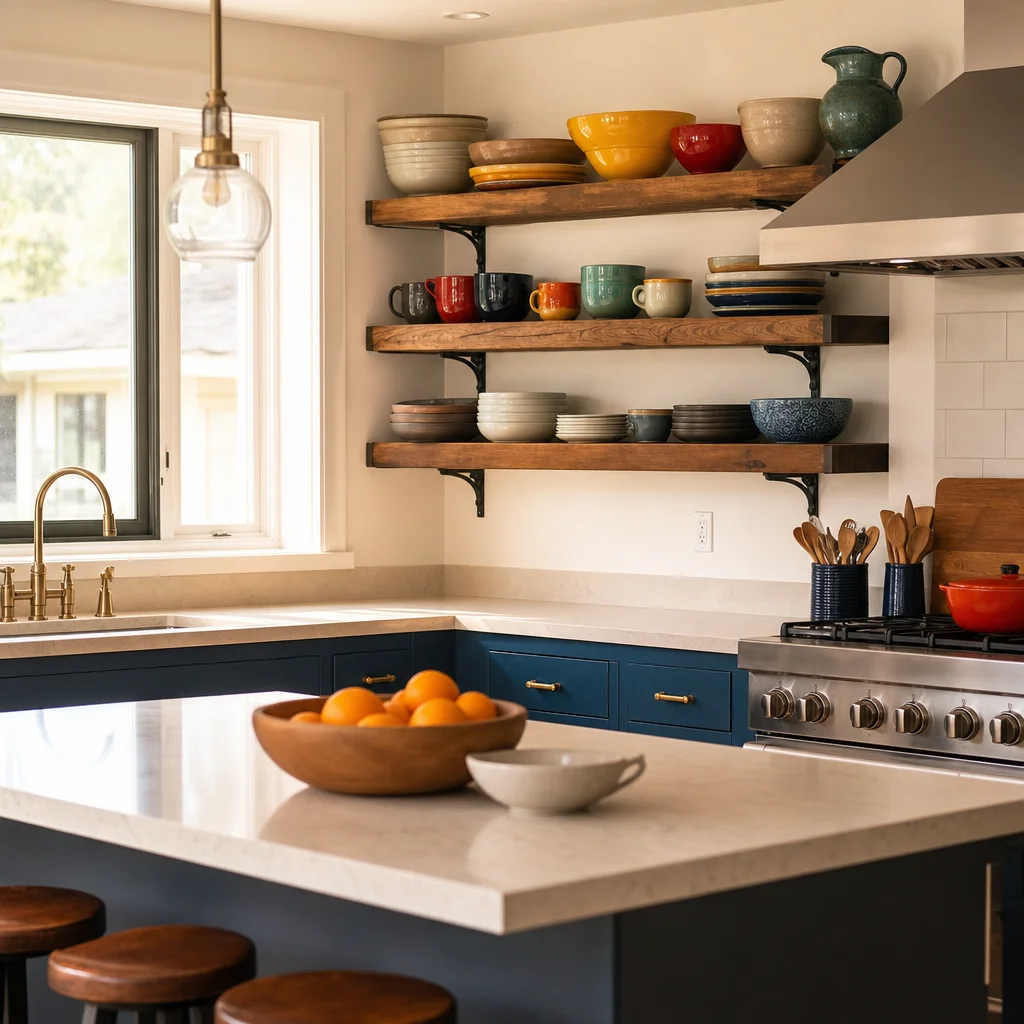
Kitchen Decor Styling: Balancing Beauty and Utility
The kitchen is often referred to as the heart of the home. While functionality is paramount, creative kitchen decor styling transforms the space from a workstation into an inviting social hub. Balancing layout and utility ensures that your kitchen styling looks polished without sacrificing prep space. By focusing on open floating shelves, organized countertops, and cohesive hardware, you can design a beautiful kitchen that is a joy to cook and host in.
To achieve a professional kitchen styling look, avoid cluttering your countertops with minor appliances. Instead, keep only your most beautiful and frequently used items on display, grouping them together on trays or boards. This maintains open workspace while showing off curated styling elements that reflect your design taste. Consider the flow of your kitchen as well. Place items you use daily, like your coffee maker or toaster, in a designated zone, but tuck away rarely used gadgets in cabinets or drawers. This approach not only reduces visual noise but also makes your countertops easier to wipe down and keep clean. Another key tip is to incorporate natural elements, such as a small vase of fresh flowers or a bowl of lemons, which instantly breathes life into the room without overwhelming the space. Remember, the goal is to create a kitchen that feels both lived-in and thoughtfully designed, where every item has a purpose and a place.
Lighting also plays a crucial role in balancing beauty and utility. Layer your lighting with ambient overhead fixtures, task lighting under cabinets, and accent lights inside glass-front cabinets. This combination ensures your kitchen is well-lit for cooking while also highlighting your decor choices. For example, under-cabinet lighting can make your countertops appear larger and more inviting, while pendant lights above an island add a focal point that draws the eye. When selecting light fixtures, consider the scale of your kitchen. Oversized pendants can overwhelm a small space, while tiny fixtures might get lost in a large room. Aim for fixtures that complement your overall style, whether that's modern, farmhouse, or transitional, and don't be afraid to mix metals for a more eclectic feel. By thoughtfully integrating these elements, your kitchen becomes a space that is both highly functional and visually stunning, perfect for everything from quick weekday meals to elaborate dinner parties.

How to Style Open Floating Shelves
Open kitchen shelving is highly popular but can look messy if unstyled. Follow these layout rules to create a display that is both practical and visually appealing:
1. Stack Core Dinnerware
Place matching plates and bowls on lower shelves for easy daily access. Stacking items neatly creates a clean, structured base that looks both modern and functional. To add depth, consider layering different sizes of plates, such as dinner plates stacked with salad plates on top. This creates a tiered effect that is visually interesting without being chaotic. If you have a collection of colorful or patterned dishes, use them as a focal point by stacking them in a way that shows off their edges. For a more minimalist look, stick to white or neutral-toned dinnerware, which blends seamlessly with most decor styles. Also, think about the height of your stacks. Avoid stacking too high, as this can make the shelf feel top-heavy and unstable. Instead, keep stacks to three or four plates high, and use shelf risers to create additional levels if needed. This not only maximizes space but also allows you to display more items without cluttering the shelf.
2. Mix Materials and Textures
Pair ceramic mugs with wooden cutting boards, clear glass canisters filled with grains, and marble bowls. Combining wood, stone, glass, and clay adds visual warmth and texture to the wall. The key is to vary the heights and shapes of these items to create a dynamic composition. For instance, place a tall glass canister filled with pasta next to a low, round marble bowl. This contrast draws the eye and prevents the shelf from looking flat. Incorporate natural materials like woven baskets or linen napkins to soften the look and add a touch of organic feel. Metal accents, such as copper or brass measuring spoons, can also be used to introduce a bit of shine and sophistication. When mixing textures, aim for balance. If you have several glossy items, add a matte piece to ground the display. Similarly, if you have many rough textures, include a smooth surface to create visual relief. This thoughtful layering makes your shelves feel curated rather than cluttered.
3. Add Decorative Accents
Display small potted herbs, antique cookbooks, or vintage artwork in wooden frames to break up rows of glassware. Herbs bring fresh color and scent, while art adds unexpected character. When choosing decorative accents, think about scale and proportion. A single large piece of art can make a bold statement, while a cluster of smaller frames creates a gallery wall effect. For herbs, opt for low-maintenance varieties like rosemary, thyme, or mint, which thrive on kitchen windowsills and can be used in cooking. If you prefer faux greenery, choose high-quality silk plants that look realistic and require no watering. Another idea is to incorporate personal mementos, such as a ceramic piece from a trip or a family heirloom, which adds a layer of storytelling to your decor. Just be mindful not to overcrowd the shelves. Leave some breathing room between items so each piece can be appreciated on its own. A good rule of thumb is to fill about two-thirds of each shelf, leaving the rest empty for a clean, airy feel.
4. Keep Color Schemes Cohesive
Stick to a tight color palette (such as whites, wood tones, and black accents) to prevent visual clutter. Grouping items by color creates a unified and calm appearance. This doesn't mean everything has to match perfectly, but there should be a consistent thread that ties the display together. For example, if your kitchen has warm wood cabinets, choose shelves and accents in similar wood tones or complementary neutrals. If you prefer a more monochromatic look, use varying shades of the same color, like cream, beige, and taupe, to add depth without introducing new hues. You can also use color to create zones on your shelves. For instance, group all white items together on one shelf and all wood-toned items on another. This creates a sense of order and makes the shelves easier to style. Additionally, consider the color of the items you use daily. If your cookware is colorful, display it on a lower shelf where it can be easily accessed but still contributes to the overall palette. By maintaining a cohesive color scheme, your open shelves will look intentional and sophisticated, rather than random and messy.
Countertop Organization Hacks
Keep countertops clear and functional by grouping items. Place cooking oils, salt cellars, and wooden spoons on a marble tray next to the stove. Utilize matching ceramic canisters to hide daily items, keeping the rest of the workspace clean. Leaning a few wooden cutting boards against the backsplash adds texture and makes them easy to grab, while a bowl of fresh fruit on the island provides a natural splash of color. To take your countertop organization to the next level, consider using vertical storage solutions. Install a wall-mounted spice rack or magnetic knife strip to free up valuable counter space. This not only keeps your tools within reach but also adds a decorative element to your walls. For small appliances, create a dedicated coffee station or baking zone where all related items are stored together. Use a tiered stand to display mugs, pods, and syrups, making your morning routine more efficient. Another hack is to use drawer dividers for utensils and gadgets, ensuring everything has a designated spot. This reduces the temptation to leave items on the counter. Finally, incorporate a small tray or dish for everyday items like keys, mail, or phone chargers, which helps keep the kitchen organized and prevents clutter from accumulating on the counters.
By organizing countertops with trays and styled containers, you keep the kitchen tidy and efficient. Proper kitchen decor styling mixes utility with beauty, ensuring your most-used room feels warm and welcoming to family and guests alike. Don't forget to regularly edit your countertop items. Every few months, reassess what you truly use and what can be stored away. This practice prevents accumulation and keeps your kitchen looking fresh. Also, consider the visual weight of items. Place heavier, larger items toward the back of the counter and lighter, smaller items in the front. This creates a sense of depth and makes the space feel more balanced. For example, a large fruit bowl can anchor the center of an island, while smaller salt and pepper grinders sit nearby. By applying these hacks, your countertops become not just functional surfaces but integral parts of your kitchen's overall design.
Selecting Kitchen Hardware and Fixtures
If you want to refresh your kitchen without a major remodel, updating hardware and light fixtures is the best approach. Replace standard cabinet pulls with matte black or warm brushed brass handles. Hang a pair of statement pendant lights over the kitchen island to serve as a visual anchor. These simple updates make a huge impact, immediately bringing a modern home decor feel to your culinary workspace. When selecting hardware, consider the style of your cabinets. For shaker-style cabinets, sleek bar pulls or cup pulls work well, while flat-panel cabinets pair beautifully with minimalist T-bar handles. Mixing hardware finishes can also add interest, but stick to no more than two finishes in the same room to maintain cohesion. For example, use brass for cabinet pulls and a matte black for the faucet. This creates a curated look that feels intentional. Additionally, don't overlook the hardware on your appliances. Replacing standard handles on your refrigerator or dishwasher with custom ones can tie the whole look together. For light fixtures, think about the size and shape of your island. A long, rectangular island might benefit from two or three linear pendants, while a smaller island could be complemented by a single, oversized drum shade. The key is to ensure the fixtures are proportional to the space and provide adequate lighting for tasks. Also, consider the color temperature of the bulbs. Warm white (2700K-3000K) creates a cozy, inviting atmosphere, while cool white (3500K-4100K) is better for task lighting. By carefully selecting hardware and fixtures, you can transform your kitchen's aesthetic without the cost and disruption of a full renovation.
Another often-overlooked element is the backsplash. While not strictly hardware, updating your backsplash can dramatically change the look of your kitchen. Subway tile is a timeless choice, but consider herringbone or vertical layouts for a modern twist. If you're on a budget, peel-and-stick backsplash tiles offer an easy DIY option that can be removed later, making them a popular renter friendly decor choice. For a more luxurious feel, consider marble or quartz slabs, which create a seamless, high-end look. When pairing backsplash with hardware, aim for contrast. A dark backsplash can make light hardware pop, while a light backsplash allows dark fixtures to stand out. Also, think about the grout color. Contrasting grout can highlight the tile pattern, while matching grout creates a more uniform appearance. By integrating these elements, your kitchen becomes a cohesive space where every detail works together. Finally, don't forget about the sink and faucet. A farmhouse sink or an apron-front sink adds character, while a pull-down faucet with a sprayer enhances functionality. Choose finishes that complement your hardware, and consider features like touchless operation or a soap dispenser for added convenience. With these updates, your kitchen will not only look beautiful but also function seamlessly for years to come.